 1:1 Mirror Quality


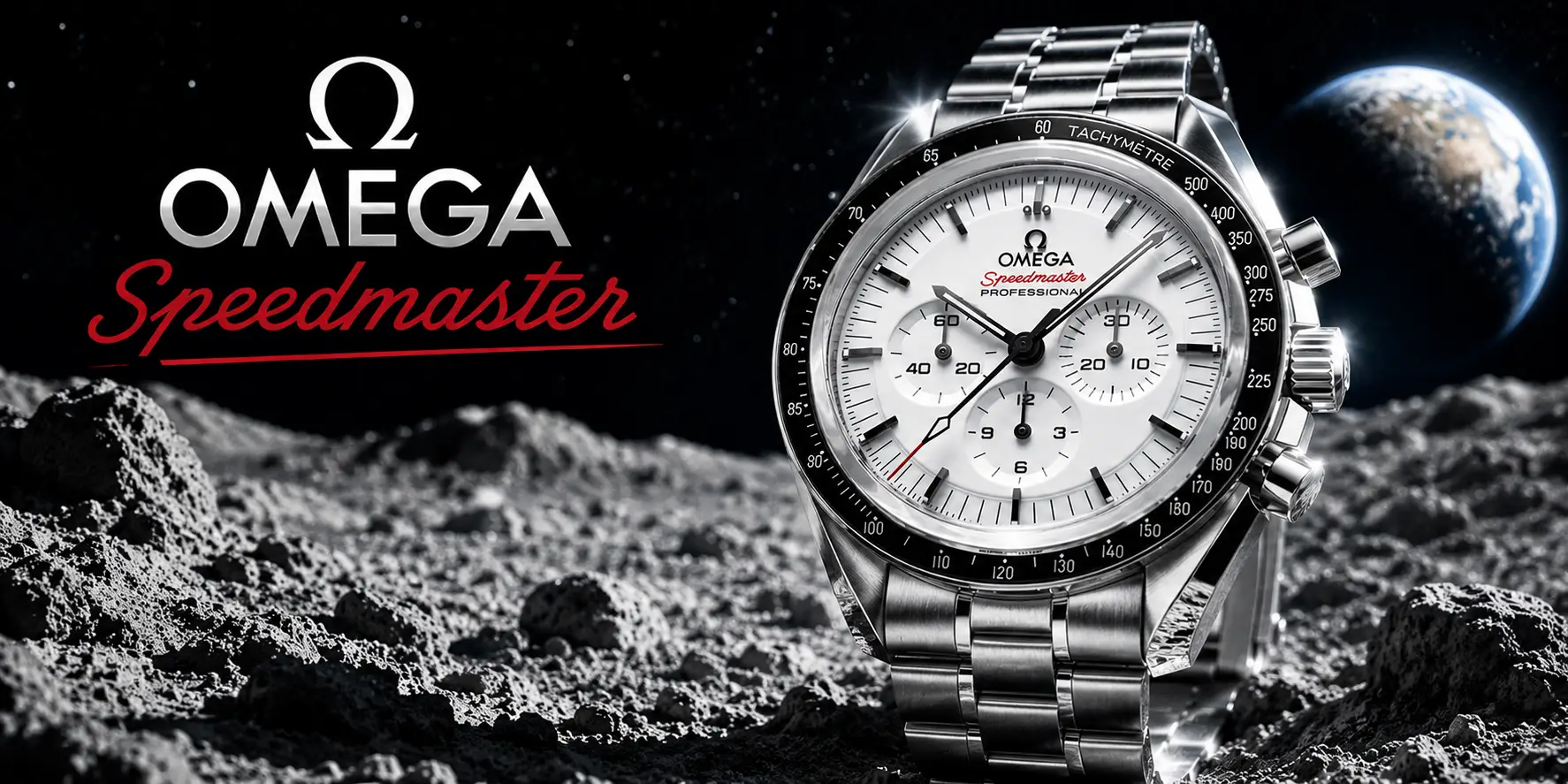
Why The Omega Speedmaster Became More Than Just A Luxury Watch
Most luxury watches lean heavily on branding. You buy them for the name, the prestige, and the signal they send in a room. The Omega Speedmaster is different. It earned its place not through marketing alone but through six decades of genuine story, purpose, and design discipline.
It was the first watch worn on the moon. NASA tested dozens of watches in 1965, and the Speedmaster was the only one that made it through. Today, it sits in museums and on the wrists of people who just genuinely love watches. That kind of history, combined with everyday wearability, is something very few watches can claim.
The Speedmaster appeals across a surprisingly wide audience. Serious collectors want it for what it represents. First-time luxury watch buyers want it because it feels honest rather than flashy. Professionals wear it because it works beautifully in any setting. Very few watches manage that range, and that is precisely what makes this one worth understanding deeply before you buy.
What Makes The Omega Speedmaster So Popular Today?
The Omega watch remains one of the few luxury watches that feels genuinely timeless beyond marketing and hype. Its popularity comes not just from history but also from the way it balances sporty design, everyday versatility, strong collector appeal, and a personality that feels more connected to watch culture than pure status.
A Luxury Watch That Actually Feels Versatile
A chronograph with a black bezel and a clean dial should feel sporty. The Speedmaster does, but somehow it never feels out of place. Pair it with a formal suit, and it reads as refined. Wear it with jeans and a white shirt, and it looks exactly right. That kind of outfit flexibility is genuinely hard to achieve in watch design.
Part of this comes from proportion. The case is not oversized in the modern fashion sense. It sits close to the wrist, wears comfortably under a shirt cuff, and never shouts for attention. The design has presence without aggression, which is a very specific kind of balance that most chronographs miss entirely.
The Design Has Stayed Relevant For Decades
Omega introduced the Speedmaster in 1957. The core visual language has not changed much since. The black tachymeter bezel, the three sub-registers on the dial, and the pump pushers at 2 and 4 o'clock. These design decisions were made before most of today's buyers were born, and they still look completely current.
That kind of design longevity is not luck. It is the result of proportions and restraint. Nothing on the Speedmaster dial feels unnecessary. The layout is functional, readable, and balanced in a way that trends simply do not erode. It is why the Moonwatch Professional you buy today looks almost identical to the one from 1969, and that feels like a compliment rather than a limitation.
It Offers More Personality Than Many Luxury Watches
There is an important emotional distinction between Rolex and Omega that rarely gets discussed honestly. Rolex ownership often signals status first. The watches are excellent, but the purchase is frequently driven by the brand recognition they carry in public. The Speedmaster attracts a different kind of buyer.
People who choose a Speedmaster tend to be genuinely interested in watches. They know what the calibre 3861 movement is. They understand why the hesalite crystal on the Moonwatch matters. They care about the history behind the specific reference they are buying. That enthusiasm creates a collector culture around the Speedmaster that is unusually deep and passionate for a production watch at this price point.
Most Popular Omega Speedmaster Models Explained
Every Speedmaster model carries a different personality. Here is a breakdown of what each one is actually about and who it suits best.
Speedmaster Moonwatch Professional
This is the watch that went to the moon, and it remains the one most people mean when they say Speedmaster. It runs on a manually wound calibre 3861 movement whose lineage traces directly back to the watches worn during the Apollo missions. Omega also put it through COSC chronometer certification and Master Chronometer testing, which means accuracy, magnetic resistance, and long-term reliability have all been independently verified.
The dial is matte black, the case is 42mm stainless steel, and the crystal is hesalite rather than sapphire. That last detail is intentional. Omega kept hesalite because it connects this watch directly to its original form, and collectors genuinely appreciate that decision.
Pricing for the stainless Moonwatch Professional sits between roughly ₹525,000 and ₹585,000, depending on the reference and the bracelet. For everything it carries technically, historically, and culturally, that is honest value in the luxury segment.
Speedmaster Racing
If the Moonwatch belongs to the purist, the Racing belongs to someone who wants more visual energy on the wrist. The dial draws from motorsport aesthetics, with skeleton or multi-layer construction and colour accents that break the otherwise monochrome layout.
It runs on an automatic watch movement, which means no daily winding ritual. For a buyer who loves the Speedmaster look but wants something less demanding to live with, this is the more practical pick. It tends to find its way to younger buyers and people coming from sports-watch rather than dress-watch backgrounds.
Pricing sits between approximately ₹500,000 and ₹710,000 depending on the reference and materials chosen.
Speedmaster '57
The Speedmaster '57 goes back to where it all started. The design is directly inspired by the very first Speedmaster reference launched in 1957, which means a slimmer case, a more rounded lug shape, and a vintage feel that the rest of the current line does not carry.
If you want a Speedmaster that leans elegant rather than sporty, this is it. The finishing is a clear step up, the dial colour options are genuinely beautiful, and the slimmer profile moves between casual and formal settings without any awkwardness. It runs on the automatic calibre 9908 with co-axial escapement.
Most steel references fall in the ₹585,000 to ₹750,000 range.
Speedmaster Dark Side Of The Moon
This is where the Speedmaster family gets truly bold. The entire case, including the bezel and caseback, is made from ceramic, which is technically demanding to produce and results in a watch that looks like nothing else in the lineup.
It sits heavier on the wrist than the steel models, and the ceramic surface has a depth and texture that photographs consistently fail to do justice to. The dial is usually skeletonised or built with high-contrast materials to match the dramatic case around it. If you want heritage wrapped in a genuinely striking modern package, this is the one.
Pricing starts around ₹1,085,000 and moves significantly higher for gold or special edition variants.
Speedmaster Model Comparison
Model | Key USP | Price Range (INR) | Best Occasion / Style |
Moonwatch Professional | First watch on the moon, manual movement, NASA heritage | ₹525,000 to ₹585,000 | Watch enthusiasts, everyday wear, heritage admirers |
Speedmaster Racing | Motorsport-inspired dial, automatic movement, modern energy | ₹500,000 to ₹710,000 | Casual wear, younger buyers, sports watch fans |
Speedmaster '57 | Vintage-inspired design, slimmer profile, premium finishing | ₹585,000 to ₹750,000 | Smart casual, formal settings, vintage admirers |
Dark Side Of The Moon | Full ceramic case, bold aesthetic, skeletonised dial | ₹1,085,000 and above | Statement occasions, serious watch buyers, bold dressers |

Omega Speedmaster Price Range Explained
Let’s have a look at the pricing of Speedmaster at different levels
Entry-Level Speedmaster Pricing
The most accessible Speedmaster models start around ₹460,000 to ₹545,000. These are typically the Moonwatch Professional or Racing references in stainless steel with a bracelet. At this price, you are getting a COSC-certified or Master Chronometer movement, Swiss manufacture, and a watch that holds its value considerably better than most consumer purchases.
Mid-Range Collector Models
The ₹585,000 to ₹835,000 range includes the Speedmaster '57, some Racing variants with more complex dials, and certain limited production references. These models often feature better finishing, coaxial escapement technology, and materials that justify the step up from the entry references.
Premium Limited Editions
Above ₹8,35,000, you encounter the ceramic Dark Side of the Moon references, gold-case variants, and collaboration or anniversary editions. The Apollo 11 50th-anniversary models from 2019 are a good example of this tier, featuring a unique construction and commanding a premium both new and on the secondary market. Gold Speedmasters can reach ₹25,00,000 to ₹41,75,000, depending on the configuration.
Pricing across the entire line varies based on movement complexity, case materials, limited production status, and bracelet type. The official Omega website keeps current pricing updated across the full range.
Here is the shorter version:
Which Omega Speedmaster Model Is Actually Right For You?
If you want the watch with real moon history and NASA approval, the MoonWatch Professional is where you stop looking. It is the definitive Speedmaster, full stop.
If you prefer something more modern with an automatic movement and no winding routine, the Speedmaster Racing is the more practical everyday choice.
If your style leans smart and formal, the Speedmaster '57 gives you that elegance. The slimmer case and vintage design make it the most versatile of the four.
And if budget is not your first question, the Dark Side of the Moon stands apart completely. The full ceramic case and bold dial put it in a different league visually.
Honestly, there is no wrong pick here. Each model is built to last decades. It just comes down to which version of the Speedmaster story feels most like you.
Omega Speedmaster Vs Other Luxury Watches
Let's compare it to the best-known luxury brand rivalries.
Speedmaster vs. Rolex Submariner
Both are chronographs. Both are icons. But they occupy very different emotional spaces. The Rolex Submariner is extraordinarily difficult to buy at retail because demand outstrips production by a significant margin. That scarcity has made it as much a financial asset as a watch, and many buyers want it precisely because others cannot have it.
The Speedmaster is the opposite of that experience. You can walk into an authorised dealer and purchase one today. The appeal is not exclusivity but meaning. The Daytona says you succeeded. The Speedmaster says you care about watches and their history.
For pure watchmaking character, the Speedmaster offers more personality per pound spent.
Speedmaster Vs Cartier Santos
The Santos is an elegant sports watch with a very different proposition. It wears closer to a dress watch despite its technical origins and suits formal contexts more naturally than the Speedmaster. The Santos buyer typically wants luxury legibility and refined aesthetics rather than chronograph function or sports heritage.
If your wardrobe is primarily formal and your interest in watches is more aesthetic than mechanical, the Santos is a genuine alternative. If you want wrist presence, a working chronograph, and a story that goes beyond fashion, the Speedmaster is the stronger choice.
Why Many Watch Enthusiasts Prefer Speedmaster
The secondary market tells an interesting story. Speedmaster references in good condition hold value reliably, and certain references appreciate meaningfully over time. More importantly, the collector community around the Speedmaster is one of the most active in the watch world. Forums, reference groups, and enthusiast communities exist specifically around individual Speedmaster references.
That kind of engaged ownership culture makes the Speedmaster more than a purchase. It becomes a gateway into a broader world of watch appreciation.
Features That Actually Matter In Real Use
The chronograph pushers on the Moonwatch are real tools, not design details. The tachymeter bezel works, the elapsed time function works, and using them on a mechanical watch feels genuinely satisfying in a way that tapping a smartphone never does.
The 42mm case wears comfortably on most wrists, sits well under a shirt cuff, and the updated bracelets on modern references make all-day wear effortless. Movement quality is backed by METAS testing independently of Omega, which means the reliability claims are not self-certified. And the build quality, the combination of brushed and polished finishing, consistently looks and feels above what the price suggests.
Is the Omega Speedmaster Worth Buying in 2026?
Who Should Buy It
Watch enthusiasts who want mechanical depth alongside an iconic design will find the Speedmaster deeply satisfying. The movement story, the historical connection, and the collector culture make it rewarding to own beyond the simple act of telling time.
Professionals who need a watch that works in board meetings and weekends without changing will find the Speedmaster's versatility practical. First-time luxury watch buyers who want something with genuine heritage rather than just a brand name will find it an honest and emotionally resonant entry point. Collectors looking for a reference with real long-term value potential will find specific Speedmaster models a sensible focus.
Who May Prefer Other Watches
Someone whose primary motivation is visible brand recognition in social settings may find Rolex a more effective choice. The Rolex name carries more immediate public recognition, and if that matters to the buyer, it is worth acknowledging honestly.
Buyers who want a watch primarily for formal occasions and find the chronograph function unnecessary may prefer the Speedmaster '57 or consider alternatives like the Cartier Santos or Omega's own Constellation line. A chronograph is a specific tool, and if it does not suit your daily life, paying a premium for it is not always rational.
Why The Omega Speedmaster Still Feels Special
Very few objects maintain their emotional relevance across six decades. The Speedmaster has done it by being genuinely good at what it does and by being attached to a human story that people still find moving. Going to the moon matters. The fact that this exact watch, in this exact form, was part of that achievement gives it a gravity that no marketing campaign can manufacture.
It is respected inside serious watch circles in a way that most luxury brands never achieve. Enthusiasts who could afford anything often choose it because it connects them to something real within watch culture. And new buyers who discover it for the first time rarely stop at one reference.
The Omega Speedmaster remains popular because it offers something many luxury watches fail to deliver: real character beyond the logo.
Want The Speedmaster Look Without The Luxury Price Tag?
If the Omega Speedmaster feels out of budget, many watch buyers today explore high-quality replica watches as an affordable alternative. Premium replica versions now offer a remarkably similar look, weight, dial detailing, and overall wrist presence compared to the original models, often at a fraction of the price. While they are not genuine luxury timepieces, good-quality replicas allow enthusiasts to enjoy the same iconic design language and premium styling without spending several lakhs on a single watch.
Everything You Actually Wanted To Know About The Omega Speedmaster
1. Is the Omega Speedmaster a good first luxury watch?
Honestly, yes. It gives you real history, everyday wearability, and strong resale value without feeling like you bought it just to show off.
2. Why is the Moonwatch so special compared to other Speedmaster models?
It is the one NASA chose and the one that went to the moon. That is not marketing; that is actual history sitting on your wrist.
3. Does the Omega Speedmaster hold its value?
Better than most watches at this price. Certain references, especially limited editions and the Moonwatch, hold value well and some appreciate over time.
4. What is the difference between hesalite and sapphire crystal on the Speedmaster?
Hesalite scratches easier but is kept on the Moonwatch for authenticity. Sapphire is harder and more scratch-resistant and comes on most other Speedmaster models.
5. How often does an Omega Speedmaster need servicing?
Generally every five to seven years depending on use. The co-axial escapement models have longer service intervals than older mechanical watches.
6. Is the Speedmaster comfortable for daily wear?
Very much so. The 42mm case sits well on most wrists, and the updated bracelets on modern references make all-day wear genuinely pleasant.
7. Which Speedmaster is best for someone who prefers a dressier look?
The Speedmaster '57. It is slimmer, has a more refined vintage aesthetic, and transitions between casual and formal far more naturally than the Moonwatch.
8. How does the Speedmaster compare to the Rolex submariner?
The rolex submariner is harder to get and leans heavily on exclusivity. The Speedmaster you can actually buy today, and it carries a richer personal story for watch lovers.