 1:1 Mirror Quality


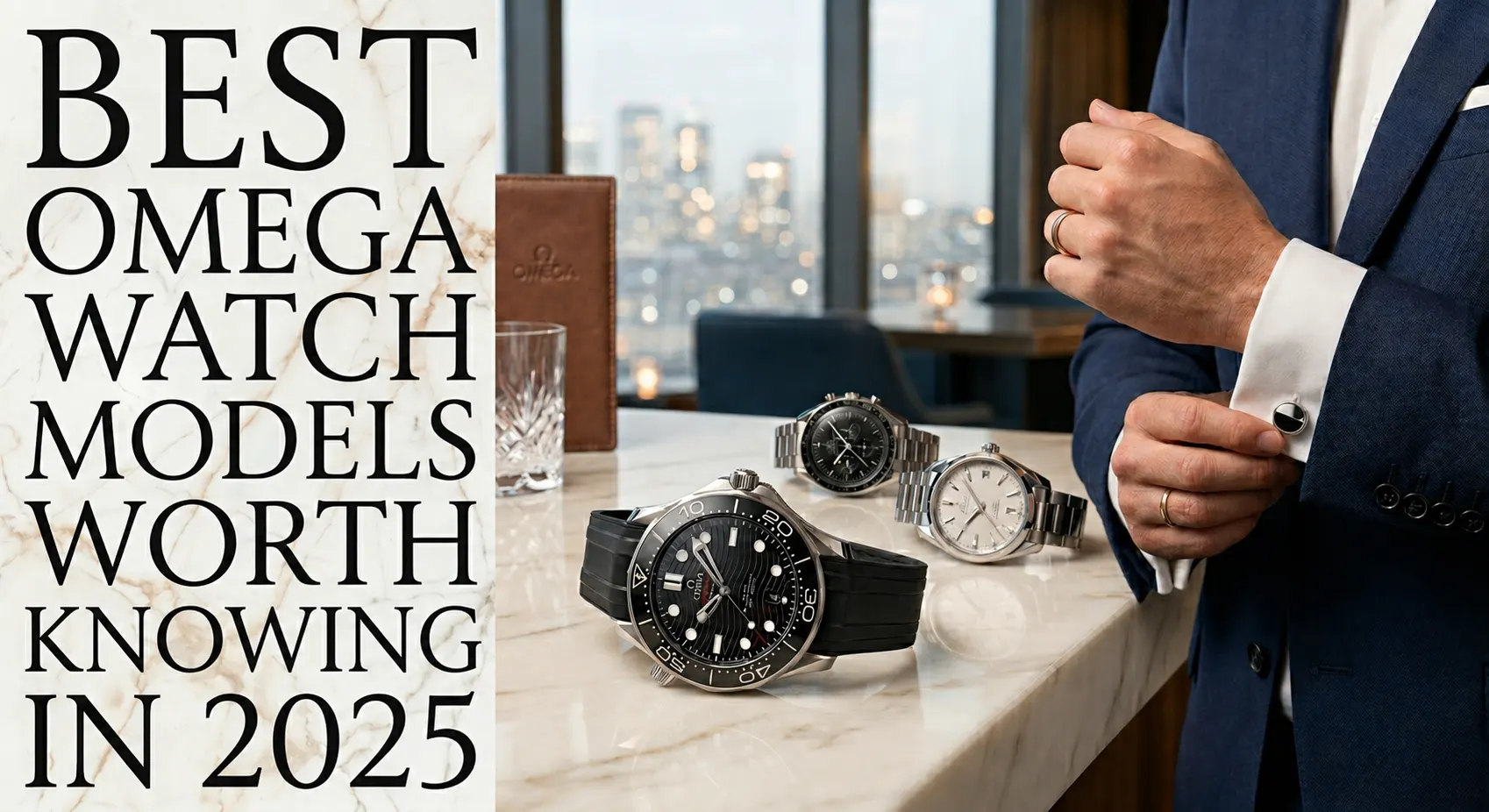
Let's Be Honest About Why You're Here
You've seen an Omega on someone's wrist, maybe a colleague, maybe a movie character, maybe your own father. Something clicked. There's a reason Omega has managed to stay relevant for over 170 years. It isn't just marketing. It's the weight of the watch, the way light catches the dial, the quiet confidence it gives the person wearing it.
But then you looked up the price. And reality kicked in.
Here in India, an original Omega starts at around ₹2.5 lakhs for entry-level pieces and shoots well past ₹8-9 lakhs for iconic models. That's a car down payment. That's a year of rent in most cities. And for most of us. Even for those doing reasonably well, spending that kind of money on a watch feels like a stretch we're not quite ready to make.
So this guide is built for real people. We'll walk you through the most popular Omega models, what they actually cost, and what makes each one special. And then we'll talk honestly about first copy alternatives for those who want the aesthetic without the financial hangover.
Explore our collection of first-copy watch options
What Actually Makes Omega Special?
Before we dive into models and prices, it's worth understanding why Omega commands the kind of reverence it does, because it's not just about the logo.
Omega was founded in 1848 in La Chaux-de-Fonds, Switzerland. Yes, they've been making watches since before electricity was common. That heritage shows up in everything, from the way movements are finished to the obsessive attention to details most people never notice.
Then there's the NASA connection. The Speedmaster was manually selected by NASA astronauts and worn on every crewed Moon mission. That's not advertising. That's actual history. And the Seamaster has been Bond's watch of choice since 1995, which is a different kind of legacy but no less powerful.
Beyond the stories, Omega uses in-house movements, meaning it builds its own mechanical hearts. Their coaxial escapement technology, developed with master watchmaker George Daniels, actually reduced friction in a way that changed how modern watches are serviced. That's real engineering, not just marketing.
Alright, enough background. Let's get to what you actually came here for.
The 5 Omega Models You Should Actually Know
Omega makes a lot of watches, but five collections matter most, both in terms of global recognition and Indian market popularity. Each one has its own personality, its own story, and honestly, its own type of person it suits.
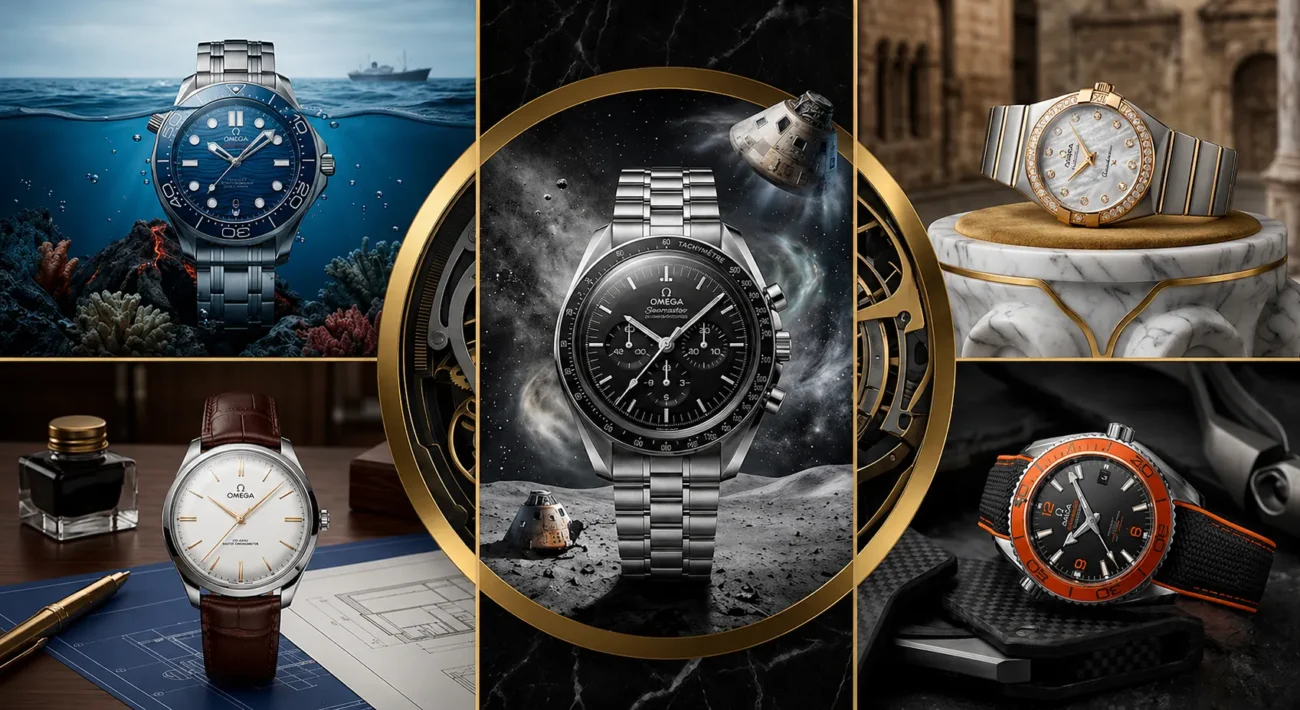
1. The Omega Speedmaster: The Watch That Went to the Moon
If there's one watch that transcends being just a watch, it's the Speedmaster. NASA put it through brutal testing, including extreme temperatures, magnetic fields, and altitude changes, and it passed every single one. So when Neil Armstrong stepped onto the Moon in 1969, there was a Speedmaster on his wrist. That moment alone has given this watch a kind of immortality no advertising budget could buy.
Design-wise, the Speedmaster hasn't changed much in 60+ years. And that's the point. The black dial, the tachymeter bezel, and the three subdials for the chronograph function. It all adds up to something that looks just as relevant today as it did in the 1960s. It's a chunky watch, definitely masculine, and it has serious wrist presence.
Who should wear it: Someone who appreciates history, doesn't mind a bit of bulk on the wrist, and wants a watch that works just as well with a suit as with a casual weekend outfit.
Original price in India: ₹600,000 to ₹850,000+, depending on the variant. The standard Moonwatch Professional reference sits around ₹6.5 lakhs at current rates.
2. The Omega Seamaster: Bond's Watch, Your Everyday Choice
The Seamaster Diver 300M is probably the most versatile watch Omega makes. It has the cool factor of the Speedmaster without the same level of vintage seriousness. It's a diver, water-resistant to 300 metres, which means it can handle anything from a swimming pool to an ocean swim. But it looks polished enough to wear to a business dinner.
The signature wave-pattern dial is what makes it instantly recognisable. Depending on the variant, you'll find it in deep blue, dark green, and classic black. The helium escape valve and unidirectional rotating bezel are functional features that most owners will never actually use, but they look incredible, and they tell a story.
James Bond has been wearing some version of the Seamaster since GoldenEye in 1995. That's thirty years of cinematic cool attached to this watch. Daniel Craig's version in Casino Royale, specifically the blue-dial, steel-bracelet Diver 300M, is probably the most iconic watch moment in recent film history.
Original price in India: ₹450,000 to ₹700,000+, depending on bracelet, dial colour, and specific reference.
3. The Omega Constellation: When You Want Pure Elegance
The Constellation is the dressiest of the bunch. It doesn't shout. It whispers. The signature design elements are the claws holding the sapphire crystal and the Roman numeral markers on the bezel. It's slim, it's refined, and it works beautifully with formal wear.
What makes the Constellation interesting is its strong appeal among women, particularly the smaller 29mm and 32mm variants. But the 41mm men's version has a quiet luxury that I personally think is underrated. It doesn't get as much attention as the Speedmaster or Seamaster, which is kind of the point.
Original price in India: ₹300,000 to ₹600,000+, with two-tone and gold variants pushing significantly higher.
4. The Omega De Ville: The Office Watch That Never Goes Out of Style
The De Ville Prestige is for people who don't want their watch to compete with their personality. It's minimal, it's elegant, and it's the kind of watch you wear to important meetings, weddings, or any occasion where you want to look put-together without drawing unnecessary attention.
The De Ville lineup includes some genuinely fascinating complications too. The Tresor is a thin dress watch that rivals anything from Jaeger-LeCoultre at double the price, and the Hour Vision offers a transparent caseback that shows off Omega's movement craftsmanship in a way that watch enthusiasts genuinely appreciate.
Original price in India: ₹250,000 to ₹550,000+ for most standard references.
5. The Omega Planet Ocean: For Those Who Want Maximum Presence
The Planet Ocean is essentially the Seamaster on steroids. It's bigger, it's heavier, and it's rated to 600 metres. This is a watch that means business. The case is thick, the crystal is deeply set, and the overall impression is one of serious capability.
It's not for everyone. If you have a slim wrist or prefer understated watches, this probably isn't your match. But if you want a watch that commands attention and looks genuinely tool-like without sacrificing finishing quality, the Planet Ocean delivers in a way few watches at this price can.
Original price in India: ₹550,000 to ₹900,000+, with some special editions going considerably higher.
Quick Style Match: Which Omega Suits You?
Not sure which model fits your lifestyle? Here's a quick breakdown:
- Speedmaster: You like history, heritage, and a sportier look. You're probably the kind of person who can name three Apollo missions.
- Seamaster: You want one watch that does everything. Office, weekend, and vacation. It handles all three without missing a beat.
- Constellation: You dress formally often and prefer watches that complement rather than compete with your outfit.
- De Ville: You want something genuinely understated. Minimal dial, clean lines, no fuss.
- Planet Ocean: You want bold wrist presence and don't mind going a bit bigger than everyone else at the table.
Is Spending ₹3 to 9 Lakhs on a Watch Actually Worth It?
This is the question most guides won't answer honestly, so let me try.
If you're buying an original Omega as a long-term investment, as an heirloom, or as the one watch you plan to wear for the next 20 years. Yes, it's absolutely worth it. A well-maintained Speedmaster Moonwatch holds its value remarkably well. Some limited editions have actually appreciated. And the craftsmanship you're getting is genuinely among the best in the world at that price range.
But here's the honest part: most people who want an Omega aren't watch collectors. They're professionals, students, fashion-conscious individuals, or watch lovers who want the design and the aesthetic, not necessarily the Swiss movement or the investment value. For that group, spending ₹6 to 8 lakhs on a single watch isn't a sensible financial decision, especially in today's economy.
You know what else? Even among actual watch enthusiasts, there's a growing openness about first copy watches, people who own them, people who've tried them, and people who've decided they'd rather have three different looks for the price of one authentic piece. That's a legitimate choice, and I'm not going to pretend otherwise.
First Copy Omega Watches: What You Actually Get
Let's clear something up: "first copy" doesn't mean all copies are created equal. There's a massive range in quality, from watches that fall apart in two weeks to surprisingly solid pieces that have been holding up for years in everyday use.
What genuinely good first copy Omega watches offer:
- Visual accuracy: The dials, indices, hands, and case shapes are replicated closely enough that most people won't know the difference unless they're specifically looking.
- Decent build quality: Higher-tier copies use stainless steel cases, mineral or sapphire-coated glass, and solid bracelet construction.
- Wearable movement: Most run on Japanese quartz or basic automatic movements that keep reasonable time.
- Price advantage: You're looking at roughly ₹3,000 to ₹15,000 for a quality first copy versus ₹4 to 9 lakhs for the original. That gap is significant.
- Variety: Instead of one watch, you can own three or four different styles for different occasions.
What they don't offer: Swiss movements, official servicing, warranty, the collector's pride of ownership, or the same finishing quality under close inspection. If someone who knows watches picks it up, they'll likely figure it out. That's just reality.
How to Choose a Quality First Copy: 6 Things to Actually Check
If you're going the first copy route, don't just order the cheapest option on a random website. Here's what separates a watch worth wearing from a waste of money:
- Case weight and feel: A decent copy should have some heft. If it feels like a toy when you pick it up, pass.
- Dial printing: Look at the text and logo closely. Poor copies have smudged or misaligned text. Good ones are sharp and clean.
- Sub-dial functionality on chronographs: On a Speedmaster copy, the sub-dials should at least look correct and proportional, even if they don't all function perfectly.
- Bezel action: The unidirectional bezel on a Seamaster or Planet Ocean copy should click with some resistance, not spin loosely.
- Bracelet quality: This is where many copies fall short. Look for solid end links, not hollow stamped metal.
- Seller credibility: Buy from sellers with actual reviews, clear return policies, and who are transparent about what they're selling. Avoid vague listings with no photos of the actual product.
Common Mistakes People Make
Going too cheap: There's a quality floor below which first-copy watches become unwearable quickly. A ₹500 watch from a random local shop is not the same category as a ₹4,000 to 8,000 quality replica. Know the difference.
Expecting original performance: First copy watches are not waterproof to 300 metres. They're not METAS certified. If you jump into a pool wearing one, you've made a decision you'll regret. Wear them for what they are, as fashion accessories.
Buying based on photos alone: Always look for video reviews or actual unboxing footage before buying. Photos are easy to fake. Real wrist shots in different lighting are harder to manipulate.
Ignoring return policies: A seller confident in their product will offer returns. If there's no return policy mentioned, that's a red flag worth taking seriously.
Final Thoughts
Omega watches are genuinely special. There's a reason they've been around for almost two centuries, and there's a reason astronauts trusted one on their wrist during the most dangerous journey in human history. The heritage is real, the craftsmanship is real, and if you ever have the budget for an original, it's a purchase you won't regret. But not everyone's at that stage in life, and that's completely fine. Watches, at their core, are about how they make you feel when you look at your wrist. If a well-made first copy gives you that same moment of quiet satisfaction every morning, then it's doing its job. Know what you're buying, buy it from someone trustworthy, and wear it with confidence. That's really all there is to it.
Questions People Actually Ask
1. Which Omega model is most popular in India?
The Omega Seamaster Diver 300M is the most popular due to its versatile design and James Bond association. The Omega Speedmaster Moonwatch comes next among enthusiasts.
2. Is the Omega Speedmaster worth buying as a first copy?
Yes. Its bold chronograph design and tachymeter bezel make it one of the best-looking first copy options. Just check sub-dial alignment and finishing.
3. How can you tell a good first copy from a bad one?
Good copies feel heavier, have sharp dial printing, and have solid bracelets. Bad ones look light, blurry, and poorly finished.
4. Which Omega watch is best for formal wear?
The Omega De Ville Prestige and Omega Constellation are best for formal outfits due to their clean, elegant design.
5. Are first-copy Omega watches durable for daily use?
A good-quality first copy can last around 2–4 years with regular use, but it’s not built for long-term heirloom durability